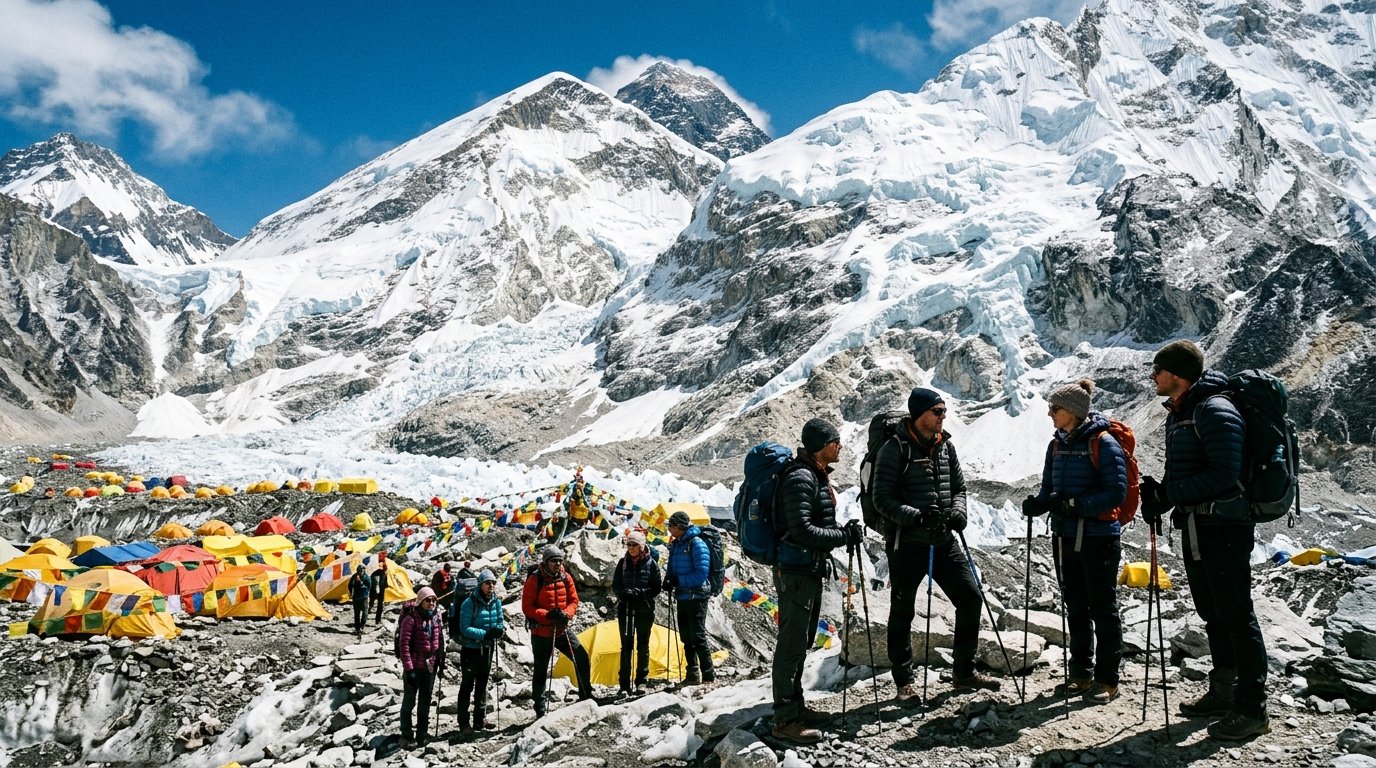
Everest Base Camp appears in thousands of photographs, usually reduced to prayer flags, a painted rock and smiling trekkers. The journey there is much richer. It begins with the excitement of Lukla, follows the Dudh Koshi through pine forest and suspension bridges, pauses in the energetic bowl of Namche Bazaar and then climbs into a landscape shaped by ice.
Base Camp itself stands at approximately 5,364 metres on the Khumbu Glacier. The summit of Everest is not clearly visible from the camp, which surprises some first-time visitors. For the classic mountain view, trekkers usually climb Kala Patthar, a viewpoint of roughly 5,545 metres, depending on the mapped reference used.
The Trail Has Its Own Rhythm
From Lukla, the common route passes Phakding and enters Sagarmatha National Park near Monjo before climbing to Namche Bazaar. A planned acclimatisation day here is essential, not optional sightseeing. Short hikes above town help the body adjust while opening early views toward Everest, Lhotse and Ama Dablam.
The trail continues through Tengboche, where the monastery sits beneath the elegant profile of Ama Dablam, then climbs toward Dingboche. Another acclimatisation day is often built in before the route reaches Lobuche and Gorak Shep. From there, trekkers visit Base Camp and attempt Kala Patthar when weather and health allow.
Why EBC Is Harder Than the Distance Suggests
The walking is not technically difficult in normal conditions, but the air becomes progressively thinner. Sleep may be broken, appetite can fall and small climbs feel surprisingly slow. Cold and wind add to the workload. The itinerary requires repeated days on the move, so recovery matters as much as one-day fitness.
The right pace should feel almost too slow in the early stages. Drinking regularly, eating even when appetite drops and reporting symptoms honestly are core trekking skills. Severe or worsening altitude symptoms require descent; determination is not a treatment.
Flights, Weather and Flexibility
Lukla flights are sensitive to weather and operational conditions. Delays are part of trekking in the Khumbu, not proof that the journey has failed. Keep buffer time before international connections and avoid building a rigid plan around the earliest possible return.
Trail conditions also change. Snow, ice and construction can alter the best line, while seasonal crowds affect lodge availability. A local guide helps manage these details and keeps the team focused on the larger safety picture.
Best Seasons for Everest Base Camp
Spring and autumn are the main trekking periods. March to May brings expedition activity and generally milder temperatures as the season progresses. October and November are popular for clear skies. Winter is quieter and colder, while the summer monsoon often brings cloud, rain and flight disruption.
How to Train for EBC
You do not need mountaineering experience. Build endurance through five or six weeks of walking, jogging, cycling or stair climbing, then add longer hikes on weekends. Strengthen the legs and core and practise using the footwear and daypack you will carry in Nepal.
Mental preparation matters too. Expect basic rooms, cold wash water, variable menus and days when the mountains disappear into cloud. Comfort returns; the experience lasts.
Walk to Everest the Right Way
Peak Core India treats acclimatisation days as part of the route, not spare time to remove. We focus on steady group movement, clear health checks and practical support from Lukla to the glacier and back.
Talk to our team about EBC dates, preparation and the travel buffer that fits your journey.