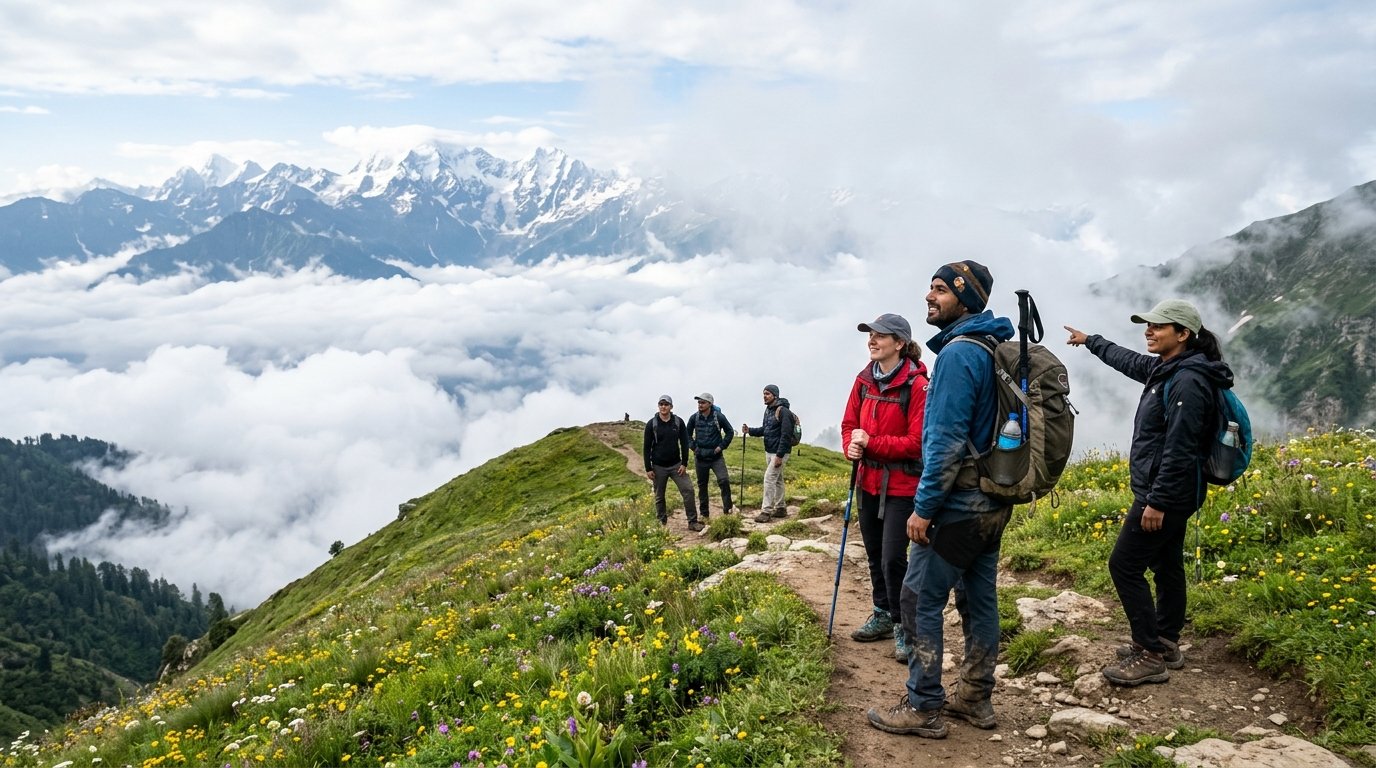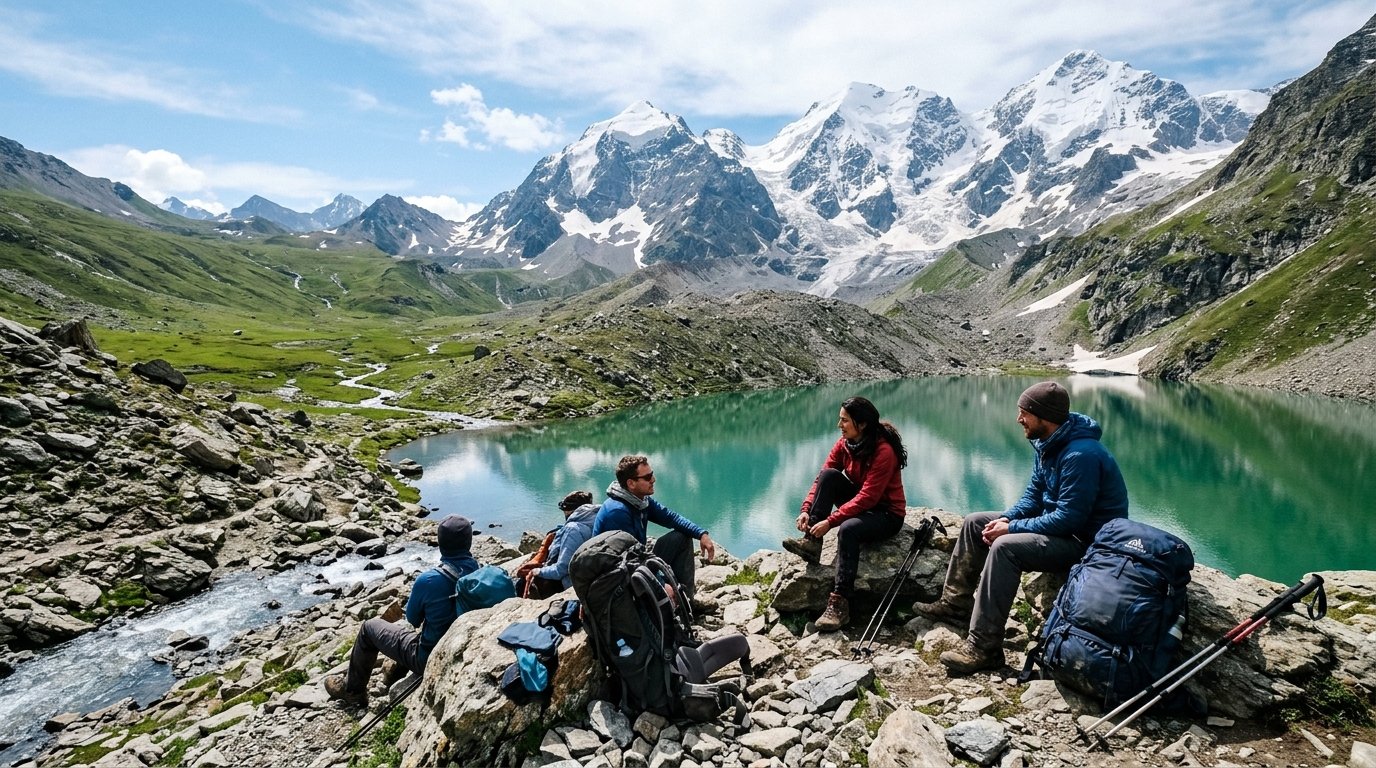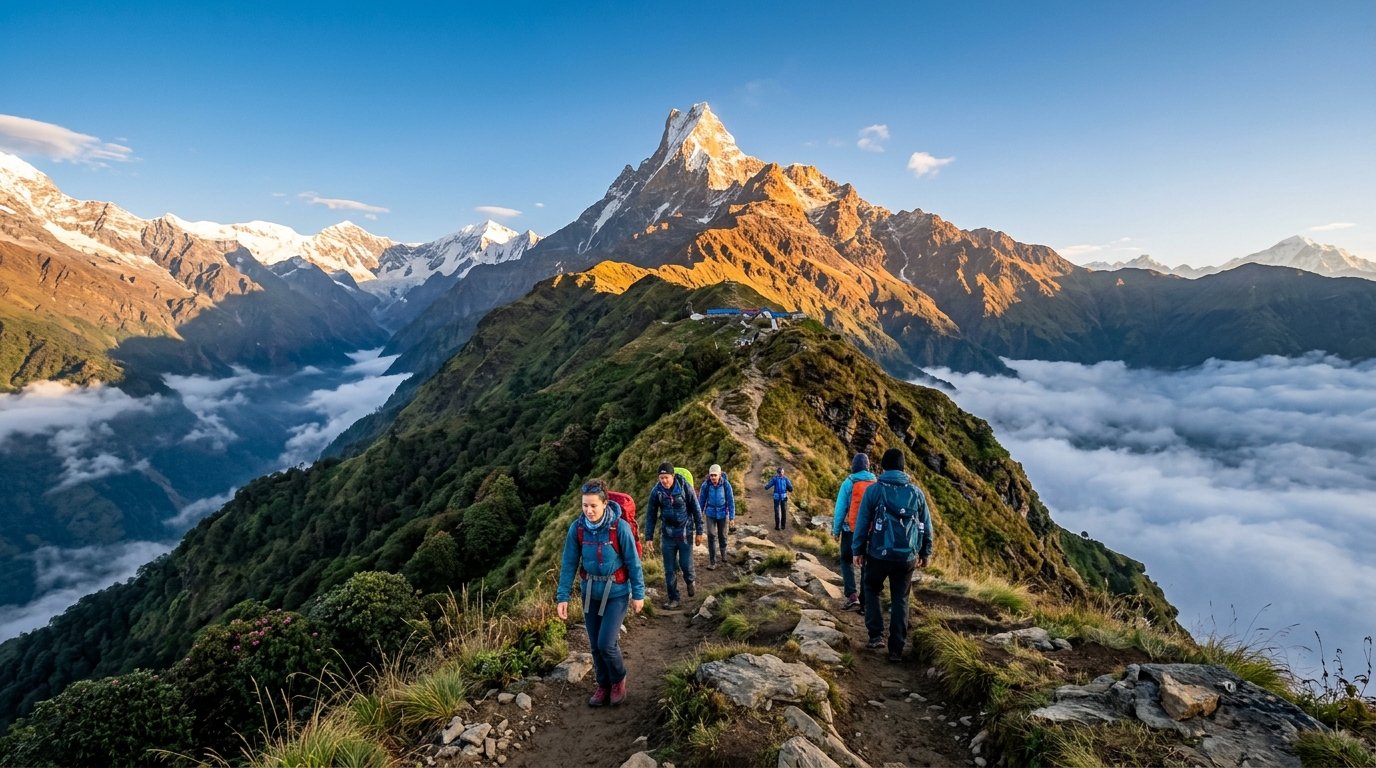
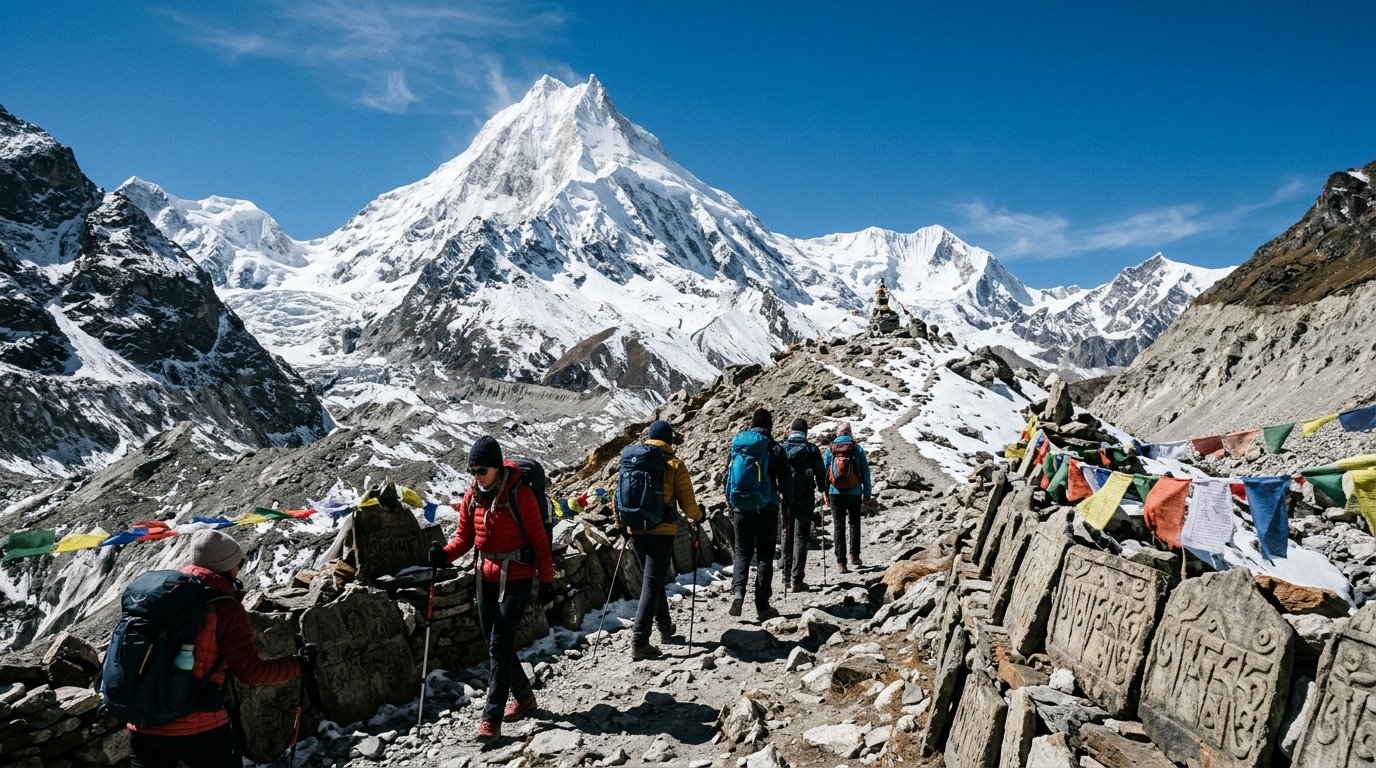
The Manaslu Circuit does not reveal itself in one dramatic moment. It builds gradually. Early days follow the Budhi Gandaki through warm valleys, fields and narrow gorges. Farther north, villages become smaller, mani walls appear beside the trail and the snowy bulk of Manaslu begins to dominate the horizon. The journey finally turns toward Larkya La, a high pass of roughly 5,160 metres that gives the trek its physical and emotional centre.
This is one of Nepal’s great circuit walks, but it feels different from the busier classics. Teahouses exist along the route, yet facilities can be simple. Days are shaped by bridges, landslide-prone sections, weather and altitude. That unpredictability is part of the appeal, provided it is managed with experience and patience.
A Landscape Connected by the Budhi Gandaki
The river is the thread that holds the first half of the trek together. The trail repeatedly climbs above it, drops toward it and crosses side valleys on suspension bridges. Forest, cultivated terraces and waterfalls gradually give way to a drier, more alpine environment.
In the upper villages, Tibetan Buddhist influence is visible in monasteries, chortens, prayer flags and stone walls carved with mantras. These places are not a backdrop built for visitors. They are living communities. Walking quietly, asking before photographing people and supporting local lodges are small ways to travel with respect.
The Route to Larkya La
A conventional circuit approaches from the lower Budhi Gandaki valley and passes settlements such as Jagat, Deng, Namrung, Samagaun and Samdo. An acclimatisation day around Samagaun is valuable; optional walks may offer closer views of Manaslu and the surrounding glaciers, depending on conditions.
From Samdo, the trail moves toward Dharamsala or Larkya Phedi. Pass day begins early. The ascent is long rather than technically difficult in normal conditions, but snow, wind and cold can transform it. After crossing Larkya La, the descent toward Bimthang can be tiring on loose or icy ground. The route later connects with the Annapurna side of the mountains.
Why This Trek Is Challenging
The main difficulty is accumulation. You walk for many days, sleep progressively higher and cross a major pass when the body is already tired. Weather may affect roads and trails. Accommodation becomes more basic in remote sections, and evacuation is not always quick.
For those reasons, the Manaslu Circuit deserves more than general gym fitness. Train with long walks on consecutive days, hills or stairs, and a backpack. Strong legs help; an adaptable mindset helps just as much.
Permits and Guided Trekking
The Manaslu region includes restricted areas. A special trekking permit is required, and Nepal’s current rules require arrangements through an authorised agency with a licensed guide. Additional conservation-area permits may also apply. Fees, minimum group provisions and procedures can change, so verify them close to departure rather than copying an old checklist from the internet.
When to Trek Manaslu
The most popular periods are spring and autumn. March to May can bring warmer days and flowering forests at lower elevations. Late September to November is valued for clearer skies and stable views. Early-season snow or late storms can affect Larkya La, while the monsoon increases the risk of rain, landslides and difficult road access.
Who Will Love the Manaslu Circuit?
Choose Manaslu if you enjoy the journey as much as the destination. It suits trekkers who are comfortable with simple lodges, long days and fewer conveniences. If you want a short trek with easy access, this is probably not the right choice. If you want a changing landscape, meaningful cultural contact and the satisfaction of crossing a Himalayan pass under your own power, it is hard to forget.
Peak Core India plans Manaslu around acclimatisation, local conditions and honest group communication. Ask us about current permits, the ideal number of days and how to prepare for your selected departure.