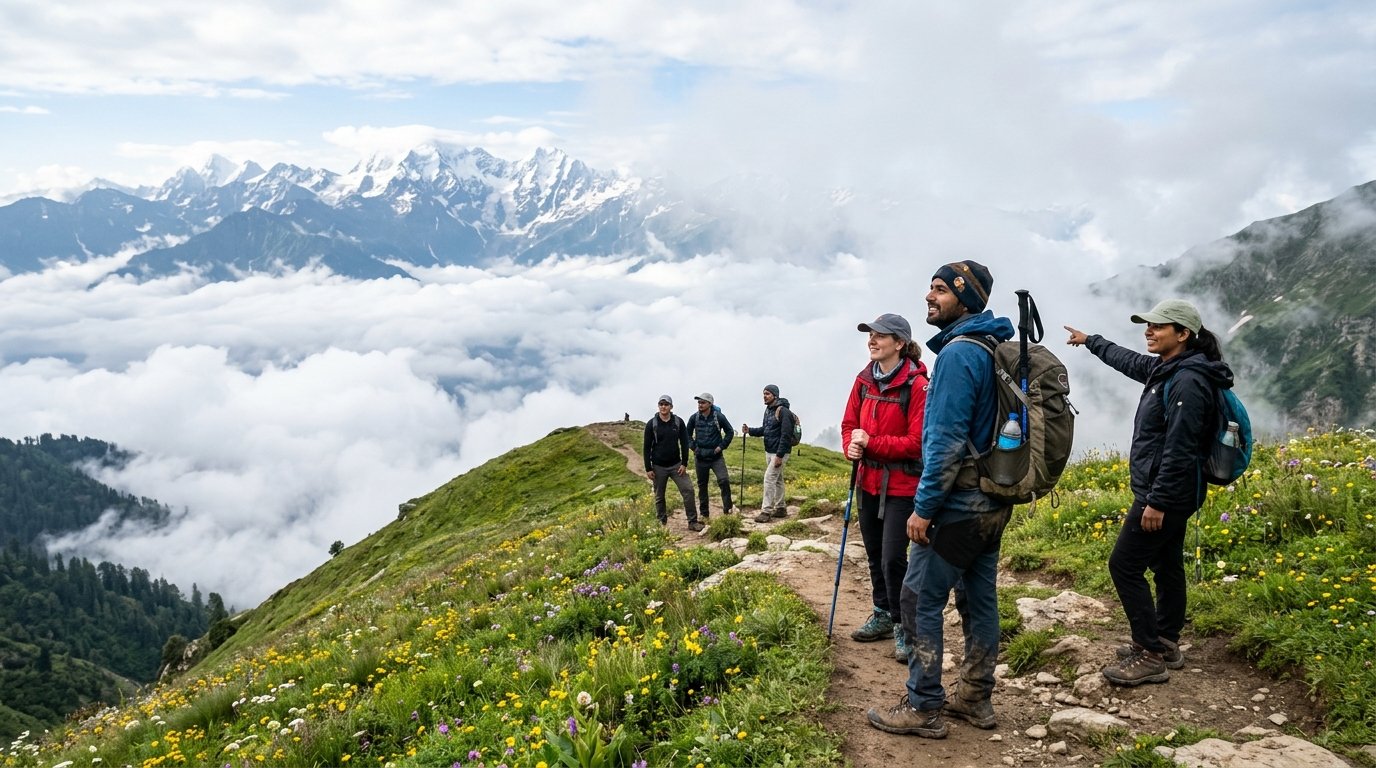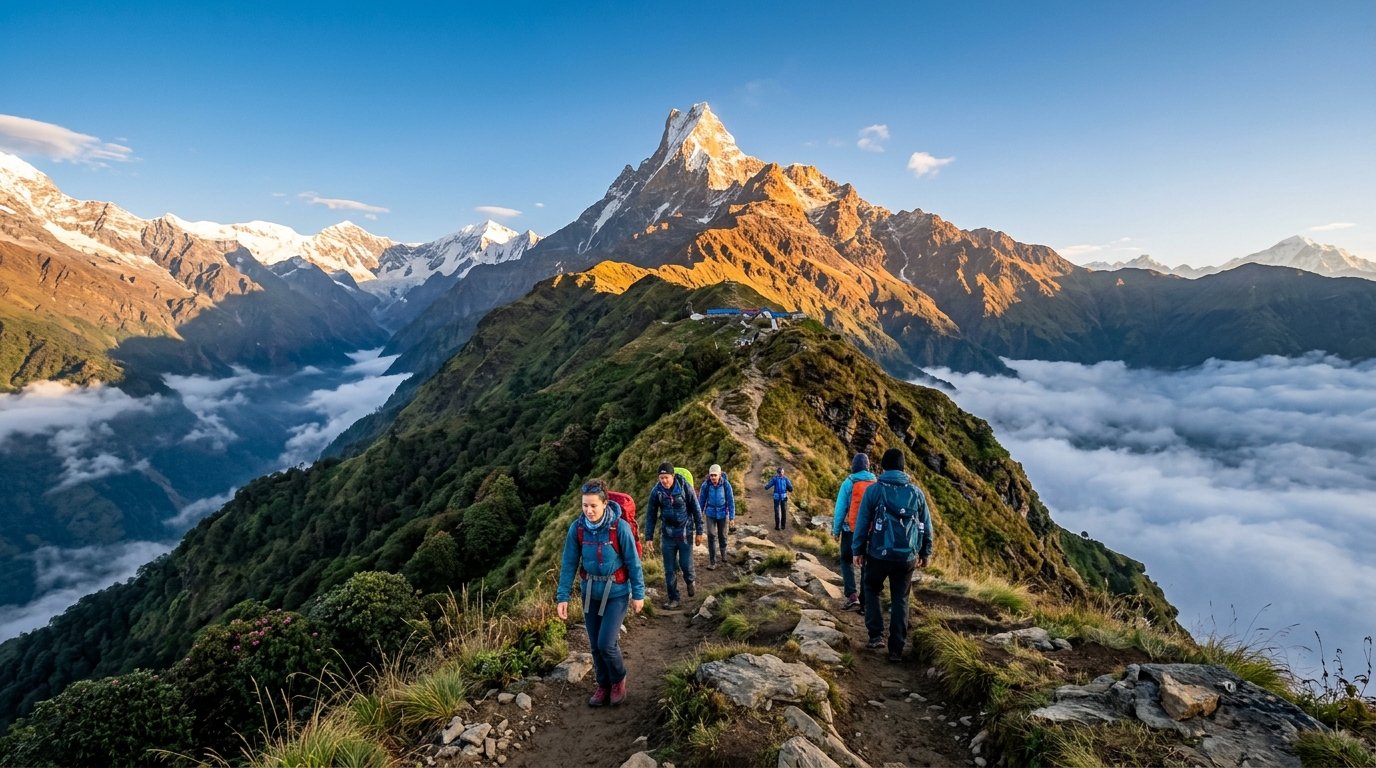
The Beas River is part of everyday life in the Kullu Valley, flowing past villages, orchards and roads. The Beas Kund trek follows its story in the opposite direction—away from Manali’s traffic and toward the high basin where meltwater gathers beneath the mountains.
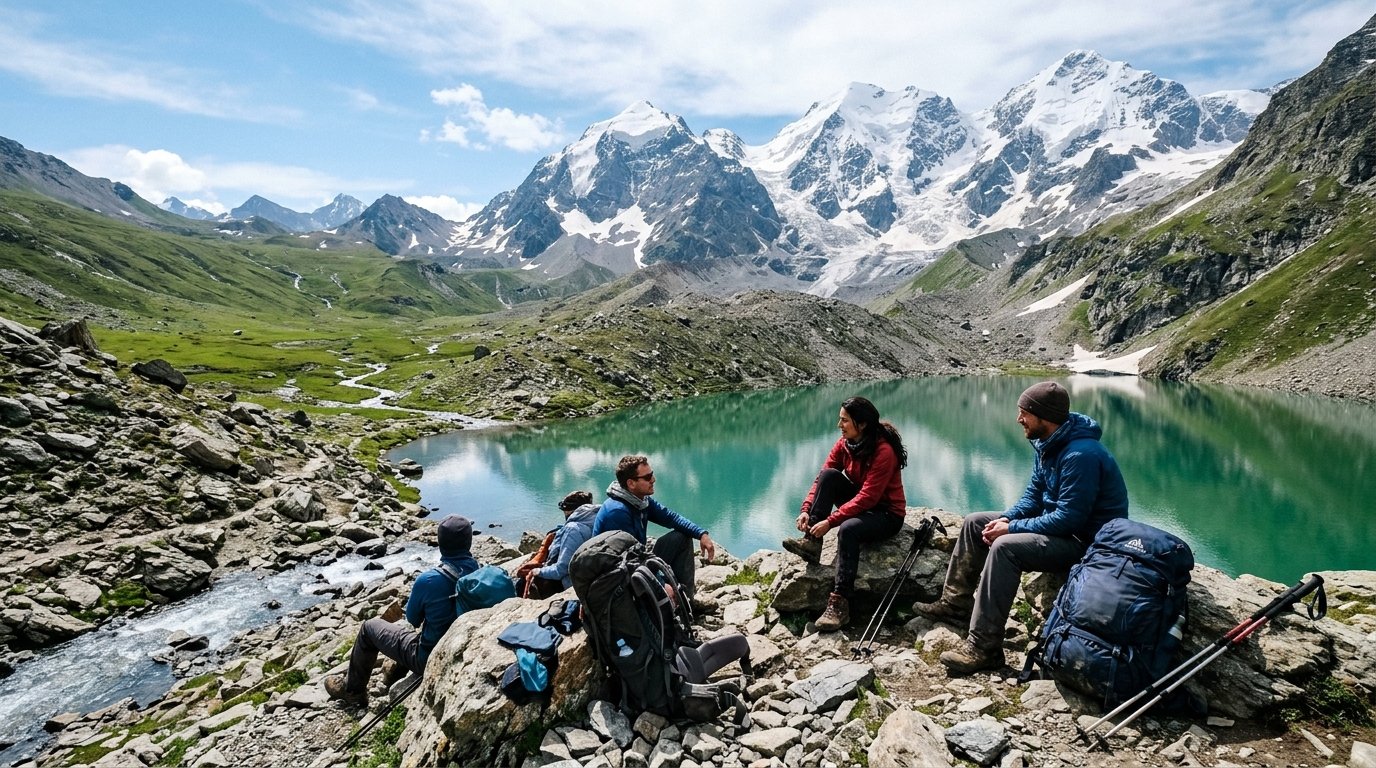
At approximately 3,893 metres, Beas Kund is a small, sacred alpine water body in a dramatic glacial landscape. The trek is short enough for a long weekend but visually generous from the beginning. Hanuman Tibba, Friendship Peak, Shitidhar and Ladakhi Peak shape the skyline, giving first-time trekkers a close look at the terrain used by Himalayan climbing teams.
The Route From Dhundi
Most modern itineraries begin around Solang or drive farther to Dhundi when road conditions permit. The trail follows the upper Beas Valley toward camps around Bakarthach or a comparable meadow site. Streams cross the route, and the broad valley gradually becomes rockier as it approaches the glacial basin.
The walk to Beas Kund moves over meadow, moraine and uneven ground. The lake may look different across the season—partly snow-covered early on, clearer later, and surrounded by changing glacial debris. After visiting the basin, trekkers return toward camp and descend to the road head.
Why a Short Trek Still Needs Preparation
Beas Kund is widely classed as easy to moderate, but altitude gain can be quick. Someone arriving from the plains and rushing straight to the upper camp may feel the elevation even if the daily distance looks manageable. Weather changes quickly in the basin, and stream crossings can become stronger during melt or rain.
Good basic fitness is enough for many beginners. Train for three to four weeks with brisk walks, stairs and one longer hike each week. Break in your shoes before the trek and practise carrying your daypack.
Best Time for Beas Kund
The usual trekking season runs from late spring through autumn, subject to snow, monsoon conditions and local access. Early summer can bring lingering snow and a striking alpine atmosphere. During the monsoon, the Kullu side becomes greener but rain may create slippery trails and swollen streams. Post-monsoon days are often clearer and cooler.
The safest date is not chosen by a generic online calendar alone. Recent snowfall, road status and river levels should be checked before every batch.
Camping in the Upper Beas Valley
Unlike Nepal’s teahouse routes, Beas Kund is typically a camping trek. Nights are colder than Manali, and facilities are simple. A warm sleeping bag, insulated layer and waterproof shell are essential even when the forecast looks friendly.
Camp discipline protects the valley. Use designated toilet arrangements, carry waste back, avoid soap in streams and do not crowd the edge of the kund. Sacred and fragile places deserve more than a photograph.
Who Should Choose Beas Kund?
This is a strong first Himalayan trek for a fit beginner and a satisfying quick escape for experienced walkers. It also makes sense for anyone curious about future climbing expeditions: the surrounding peaks turn the trek into a natural introduction to Manali’s mountaineering geography.
Peak Core India keeps Beas Kund groups focused on safe pacing, clean camps and practical learning. Ask us about the next departure or combine your trek with time in Manali.