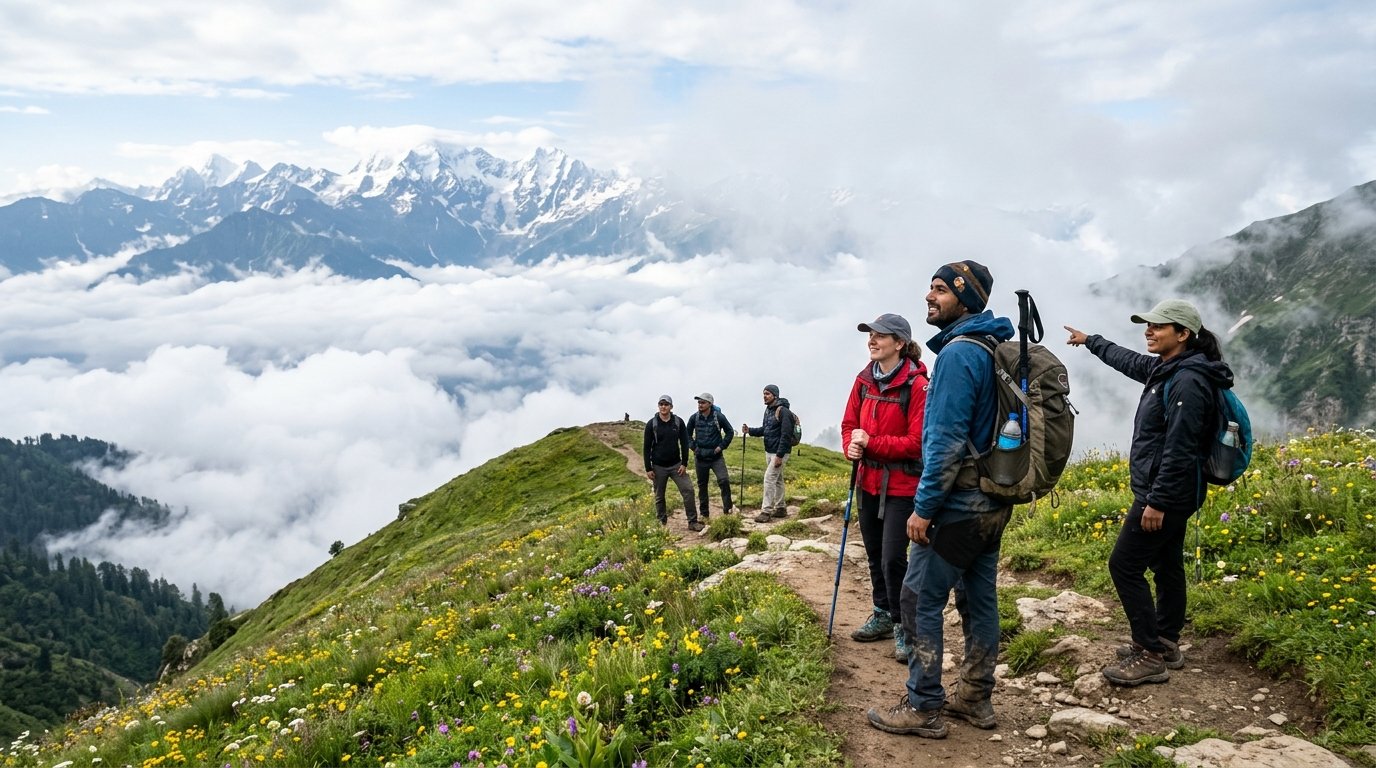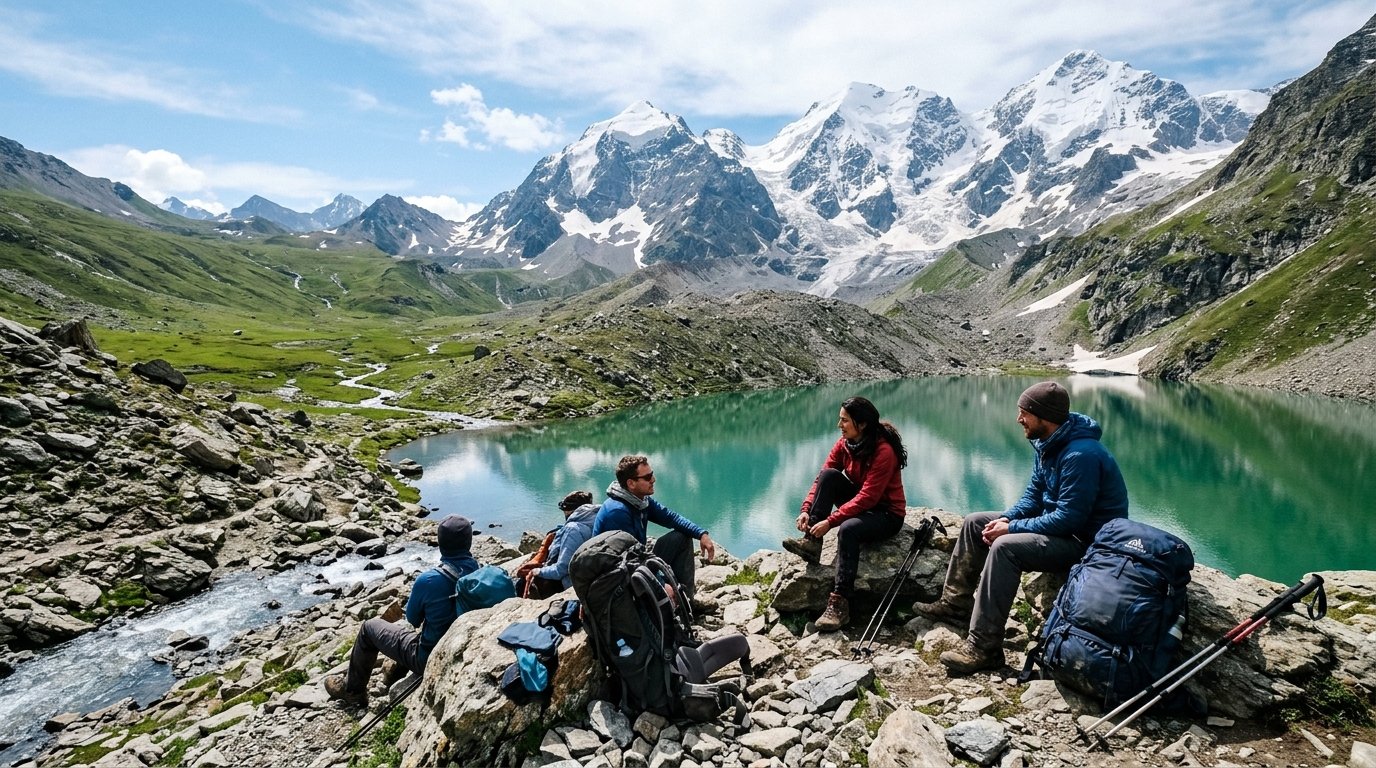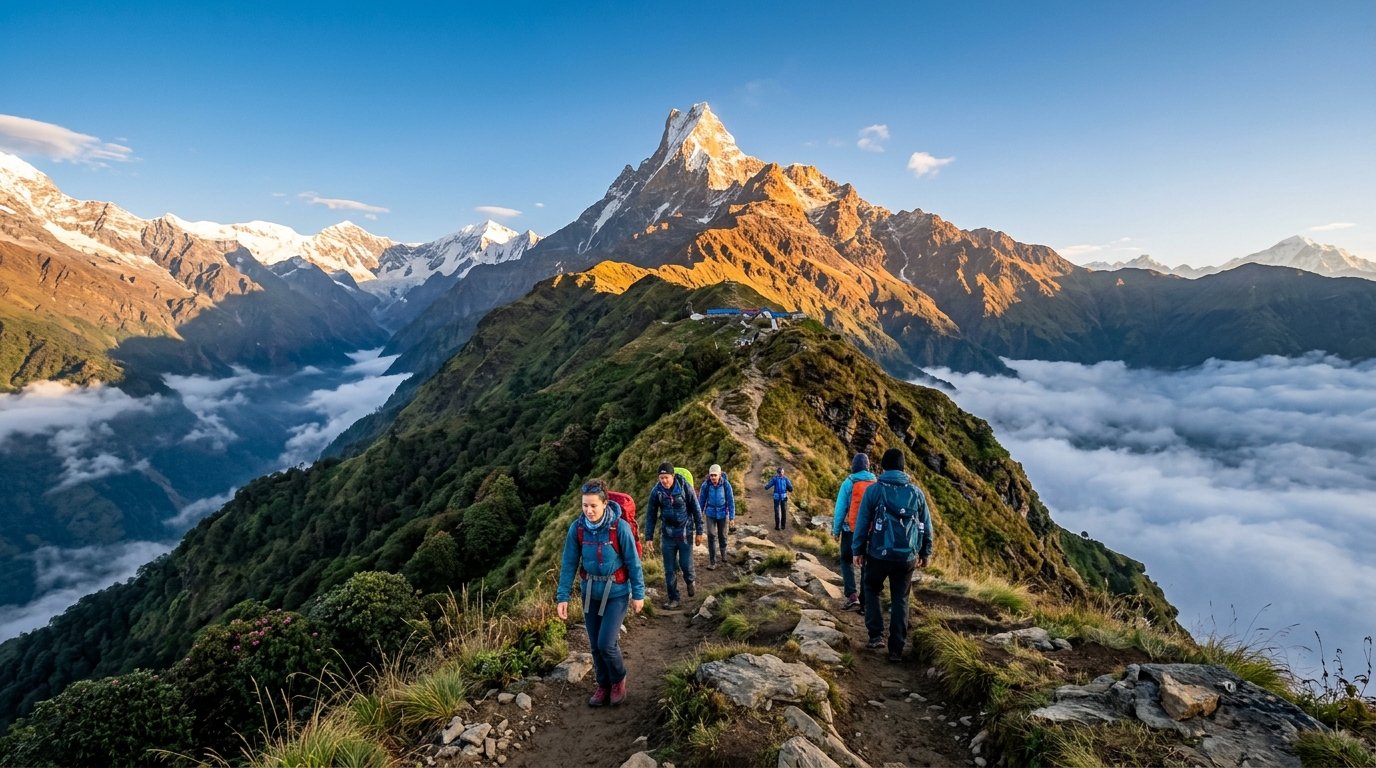
Some Himalayan trails impress you at the finish. The Annapurna Base Camp trek begins working its magic much earlier. The first days move through stone villages, terraced hillsides and forests where waterfalls appear between the trees. Then the valley tightens, the air cools and the mountains seem to move closer with every hour. By the time you enter the Annapurna Sanctuary, the landscape has changed completely.
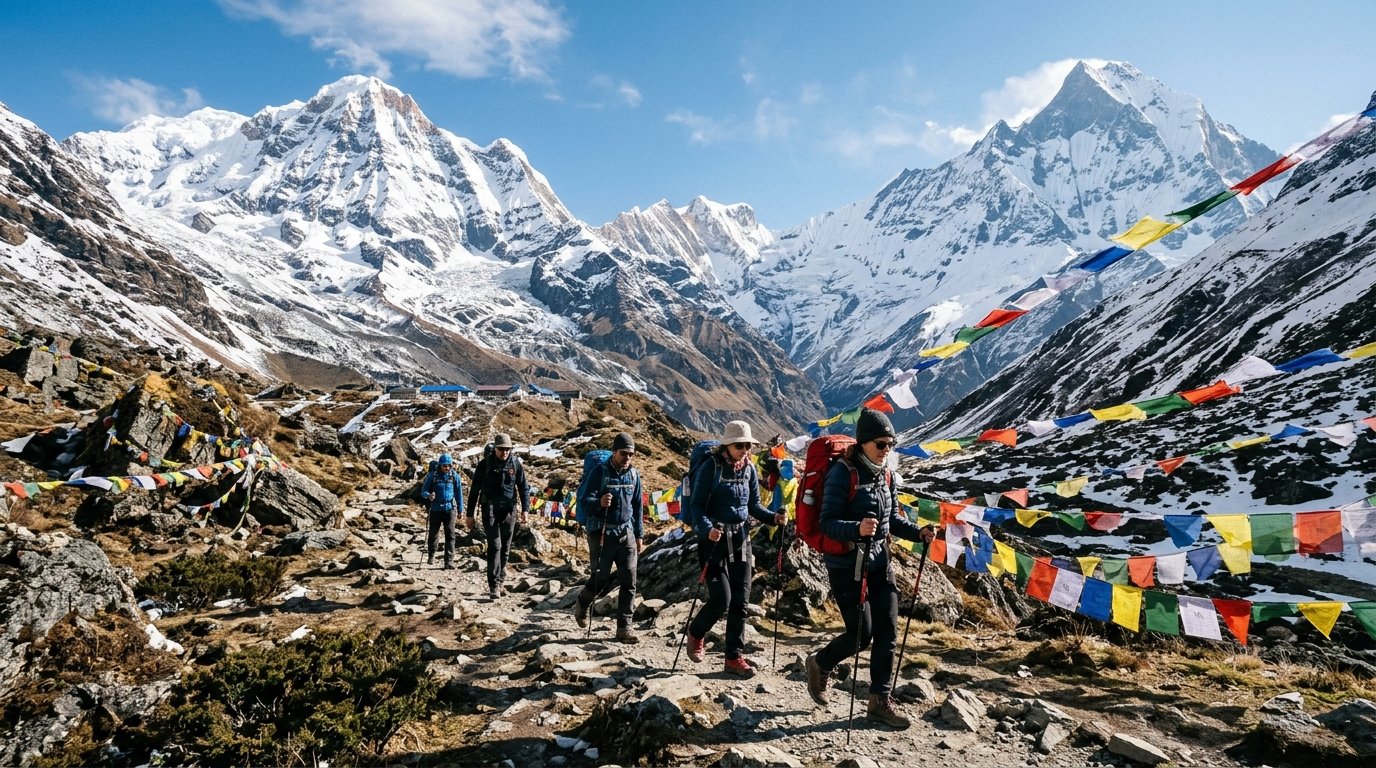
At approximately 4,130 metres, Annapurna Base Camp sits inside a vast natural amphitheatre. Annapurna I, Annapurna South, Hiunchuli and Machhapuchhre rise around the basin, making the final morning feel less like a viewpoint and more like standing inside the Himalayas.
Why the ABC Trek Feels So Rewarding
ABC offers a rare balance. It reaches genuine high altitude but does not require mountaineering skills. The trail has established teahouses, while the scenery changes almost every day. You experience Gurung culture, bamboo and rhododendron forests, deep river valleys, glacial terrain and close mountain views within one compact journey.
It is also a social trail. Evenings in the teahouses bring together first-time trekkers, experienced hikers and travellers from different countries. There is usually laughter around the dining room, wet socks near the heater and at least one person quietly wondering how many stone steps are waiting the next morning.
How the Route Unfolds
Most ABC itineraries begin from Pokhara and enter the trail around Jhinu, Ghandruk or a nearby road head, depending on local access and the chosen programme. The route commonly climbs through Chhomrong and Sinuwa before entering the narrower valley toward Bamboo, Deurali and Machhapuchhre Base Camp. The final section continues into the sanctuary to Annapurna Base Camp.
The return follows the valley back toward lower settlements. A stop near Jhinu can add the welcome reward of natural hot springs when access and time permit. Exact walking stages vary, but a good itinerary should protect acclimatisation rather than forcing the group to chase a timetable.
Is Annapurna Base Camp Difficult?
The trek is generally considered moderate, but “moderate” does not mean effortless. Long stair sections, repeated climbs and descents, cold mornings and several consecutive walking days test the legs. The highest night is above 4,000 metres, so headache, nausea or unusual fatigue must never be ignored.
You do not need technical experience. You do need steady fitness, suitable footwear, sensible pacing and the discipline to speak honestly with the trek leader about how you feel. Four to six weeks of brisk walking, stair climbing and basic leg-strength work can make a noticeable difference.
Best Time for the ABC Trek
Spring and autumn are the most popular windows. March to April often brings rhododendron colour and changing snow conditions, while October to November usually offers crisp views and relatively stable weather. Winter can be beautiful but colder, with snow affecting the upper trail. The monsoon months bring heavy rain, leeches, cloud cover and a greater risk of landslides or transport disruption.
Mountain weather never follows a marketing calendar perfectly. A responsible itinerary keeps room for changing conditions and follows local guidance.
What to Pack Without Carrying Your Entire Wardrobe
Build a simple layering system: a breathable base layer, warm mid-layer, insulated jacket and waterproof shell. Add broken-in trekking boots, spare socks, gloves, a warm cap, sun protection, a headlamp and a small personal medical kit. A sleeping-bag liner adds comfort in teahouses. Carry a reusable bottle and use the water-treatment method recommended by your guide.
The Peak Core India Approach
For us, ABC is not a race to a signboard. The aim is to help every trekker understand the trail, adjust to altitude and enjoy the villages and landscapes along the way. Clear briefings, realistic walking pace and responsive decisions matter more than an impressive-looking schedule.
If Annapurna has been sitting on your wish list, speak with Peak Core India about the right batch, preparation plan and route format for you.