Yunam Peak has become a popular answer to a big question: which mountain should I choose for my first 6,000-metre summit? At approximately 6,111 metres, the peak rises in Himachal Pradesh’s Lahaul region near the Baralacha La landscape. It is accessible by road compared with many remote Himalayan objectives, and the normal ascent may not require advanced rock or ice climbing in favourable conditions.
That description is accurate—and incomplete. Above 6,000 metres, walking is work. Loose scree, snow, cold, wind and a long summit push can expose every weakness in fitness, acclimatisation and pacing. Yunam is a straightforward mountain only for a person who has prepared seriously.
The Road Gives Access, Not Acclimatisation
One unusual feature of Yunam is how quickly a vehicle can carry you into very high terrain. Teams often travel from Manali through the Lahaul side toward the Bharatpur or Baralacha La area. The scenery is spectacular, but rapid altitude gain is a physiological risk.
A sound programme includes staged acclimatisation and conservative activity after arrival. Headache, poor sleep and reduced appetite are common signals to monitor, not inconveniences to hide. A rest or rotation day may look unproductive on an itinerary; in reality, it can be the most important climbing day.
What the Route Feels Like
The approach crosses a dry, high-altitude landscape where the ground alternates between trail, moraine and loose rock. Snow cover changes by season. Base and higher-camp arrangements depend on conditions and team strategy.
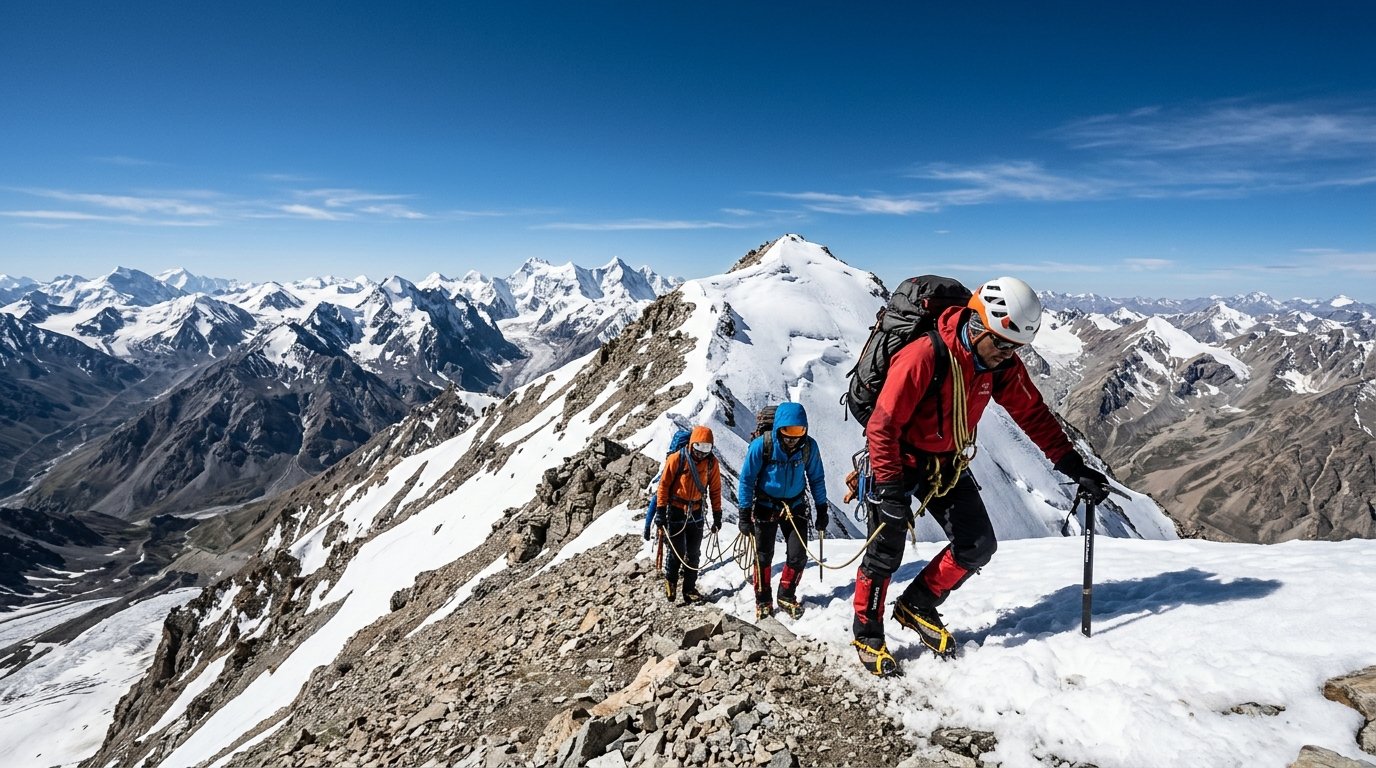
Summit day begins early and can be lengthy. The route often demands patient movement over scree before reaching steeper snow or mixed terrain. When the sun rises, the surrounding ranges open across Lahaul, Zanskar and the greater Baralacha region. The view is enormous, but it arrives only after hours of disciplined effort.
Who Should Attempt Yunam Peak?
The ideal participant has completed at least one trek above 4,500 or 5,000 metres and understands how their body responds to altitude. Previous use of crampons and an ice axe is valuable. If training is included, arrive fit enough to learn; a guide cannot teach endurance in two days.
Give yourself eight to twelve weeks for preparation. Combine running, cycling or fast walking with uphill sessions carrying a moderate pack. Strength work should focus on calves, quads, glutes and core. Include long, slow sessions because summit day rewards efficiency more than speed.
Best Time for Yunam Peak
The practical season is influenced by road opening, snow cover and the short summer of Lahaul. Many expeditions operate from mid-summer into early autumn, but each year develops differently. Heavy snow can delay access; late-season cold can harden the route. Check batch-specific conditions rather than relying on a generic month chart.
The Gear Matters Only If You Can Use It
Essential equipment may include mountaineering boots, crampons, an ice axe, helmet, harness and personal safety attachments, depending on the current route. Clothing should provide sun protection during the day and reliable insulation before dawn. Test boots, glove systems and backpack fit before leaving home.
A Better Definition of Success
On a first 6,000er, success includes reaching camp healthy, applying new skills correctly, supporting the rope team and making a safe decision when the mountain changes. A summit is a powerful achievement, but it is not the only evidence that an expedition mattered.
Peak Core India’s Yunam programme is built around acclimatisation, practical instruction and clear turnaround rules. Share your trekking background with us, and we will help you judge whether Yunam is the right next step.