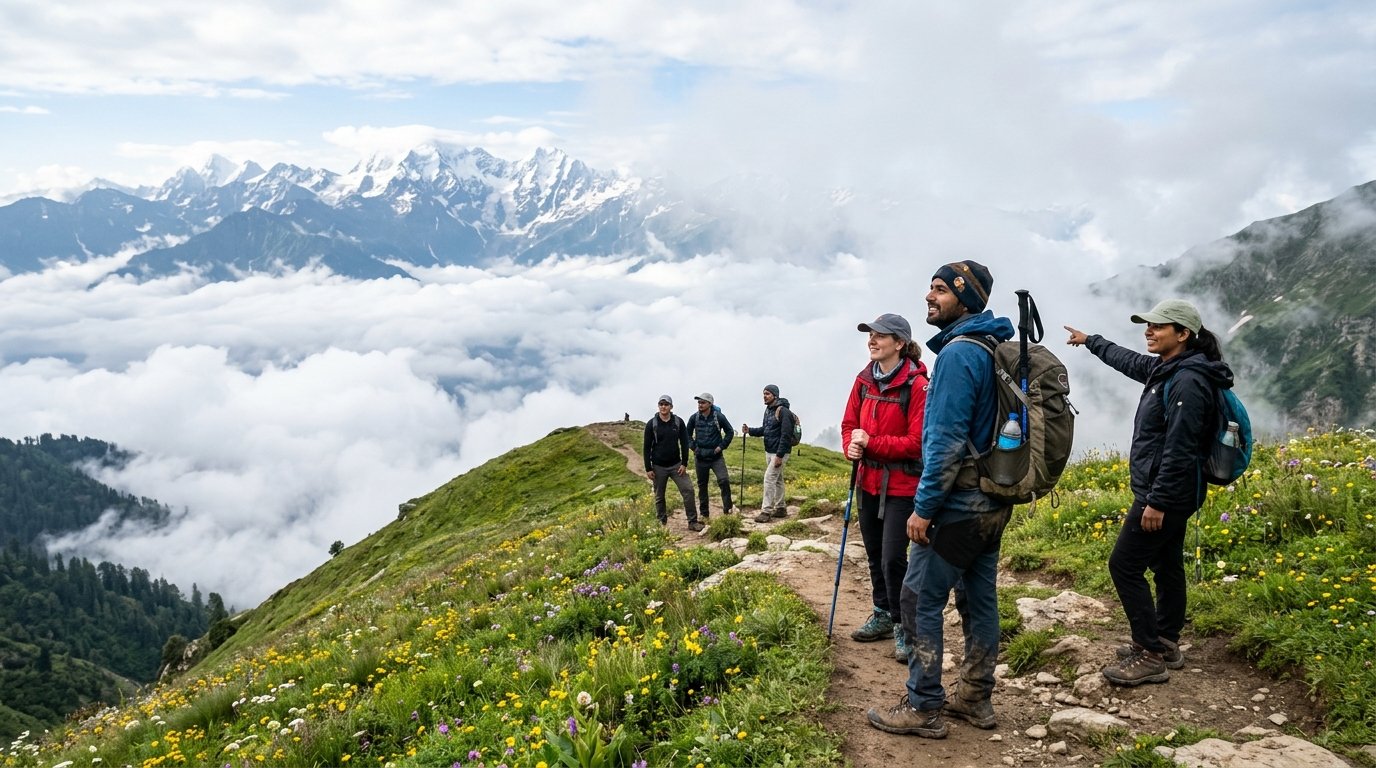
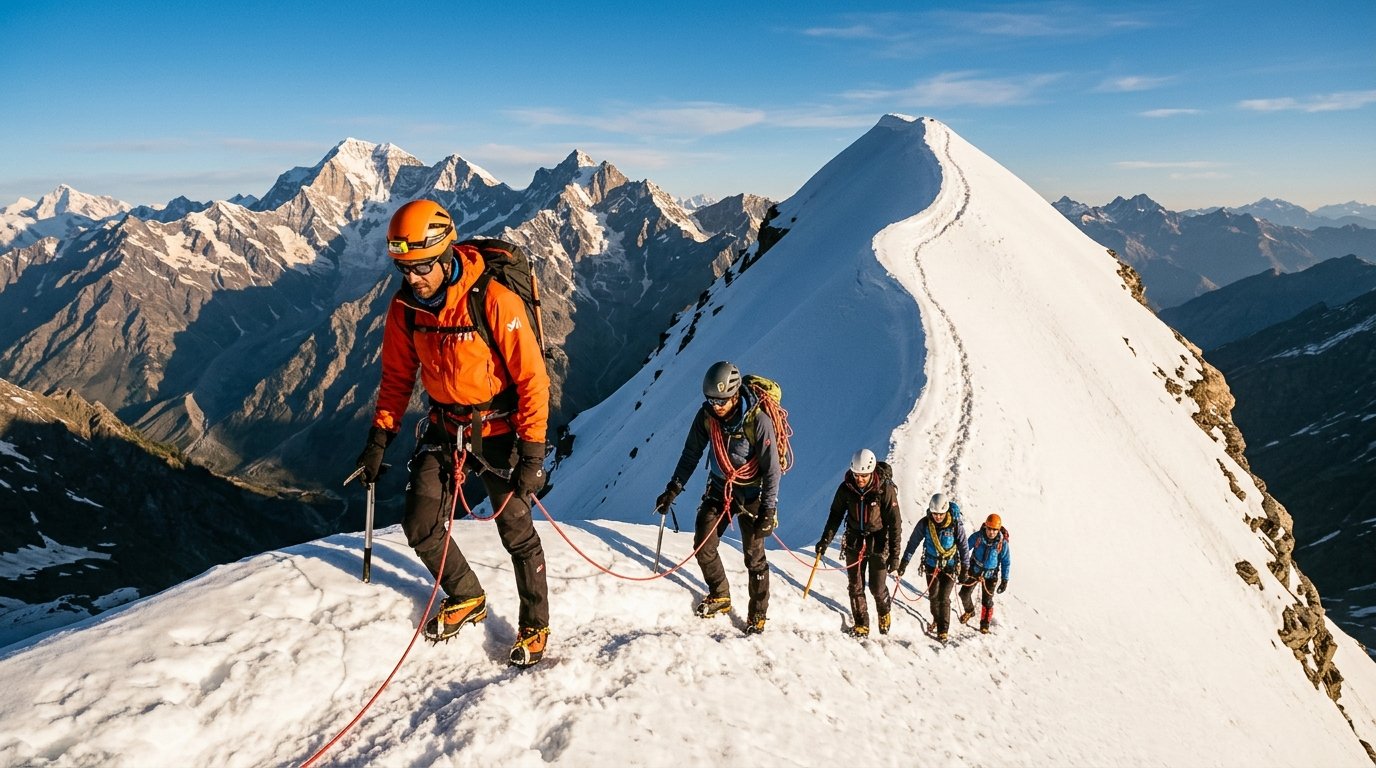
There is a moment on Friendship Peak when the familiar rhythm of trekking changes. Walking poles give way to an ice axe. Team members clip into a rope. The snow feels firmer under crampons, and every movement becomes more deliberate. That transition is exactly why the peak has become such a meaningful first summit for aspiring mountaineers.
Friendship Peak rises to approximately 5,289 metres in the Pir Panjal range near Manali. Its approach passes through the Solang and Beas Kund landscape, placing climbers among some of Himachal’s most recognised mountain terrain. It is accessible compared with remote expeditions, but it should never be described as an easy trek.
Why Friendship Peak Is a Strong First Objective
The expedition introduces the habits that matter on bigger mountains: acclimatisation, equipment checks, rope discipline, early starts and decisions based on conditions rather than emotion. Under suitable snow and weather, the normal route can be approachable for a fit person with prior trekking experience and pre-climb training.
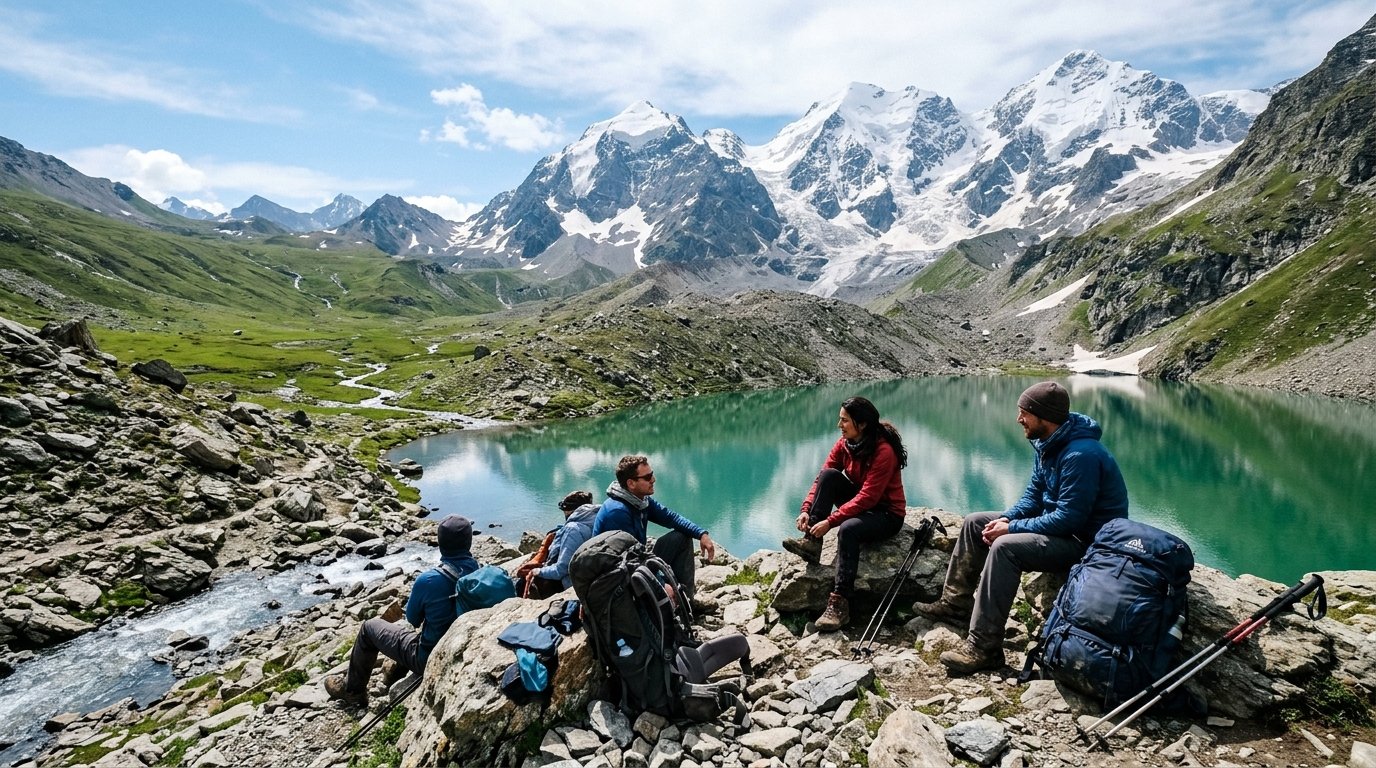
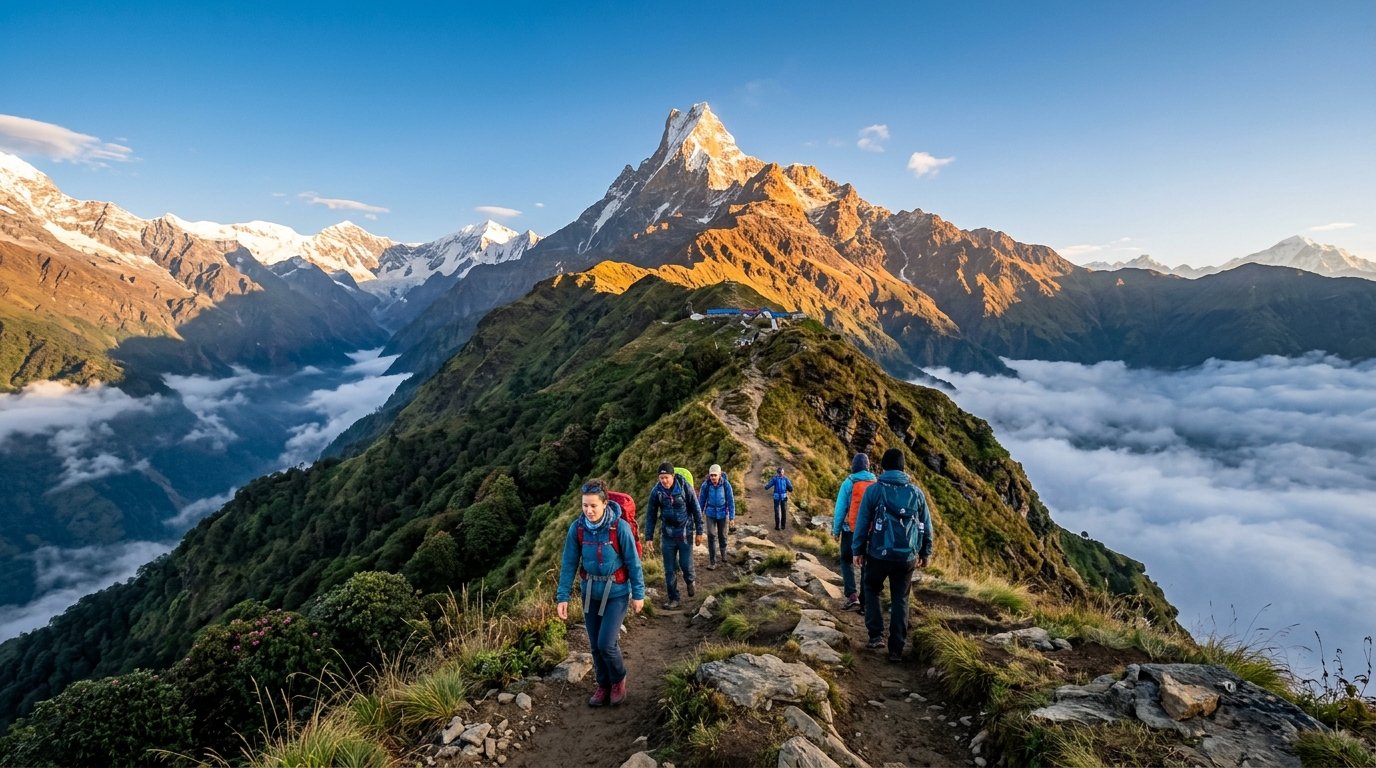
The reward is not only the summit. The approach itself moves from forest and meadow to moraine, glacier and snow. Views can include Hanuman Tibba, Shitidhar, Ladakhi Peak, the Dhauladhar and the wider Pir Panjal ranges.
What the Expedition Usually Looks Like
The journey commonly begins around Manali and Solang before moving toward Dhundi, Bakarthach and the Beas Kund basin. Camps and exact route choices vary with season, snow cover and operator logistics. A training and acclimatisation phase should include instruction in crampon walking, ice-axe use, rope movement, self-arrest and basic safety systems.
Summit day generally starts before sunrise. Climbers move slowly to conserve energy and take advantage of firmer snow. The slope, snow texture and exposure change from year to year. A section described as straightforward in one season can become icy, crevassed or unsafe in another.
Is Friendship Peak Beginner-Friendly?
It is better called an introductory mountaineering objective than a beginner trek. Candidates should already be comfortable on multi-day high-altitude treks and able to walk uphill for several hours with a pack. The technical systems can be taught during an expedition, but fitness, discipline and the ability to follow instructions must arrive with the participant.
A practical training plan includes running or cycling for aerobic capacity, loaded stair sessions, lunges and squats for leg endurance, and long weekend hikes. Train consistently for six to eight weeks; last-minute intensity rarely replaces a base.
Best Time to Climb
Common climbing windows fall in late spring and early summer, with some teams operating in the post-monsoon period depending on snow and access. There is no guaranteed “perfect” week. Fresh snow, wind loading, hard ice, cloud and rising daytime temperatures all influence the go or no-go decision.
What Safety Looks Like on a Summit Attempt
Good safety is often quiet. It is a guide checking harnesses twice, a climber reporting a headache early, a team maintaining spacing on the rope and a turnaround time being respected even when the summit appears close. Weather forecasts are useful, but observations on the mountain are decisive.
Climbing equipment should be correctly fitted and understood before summit night. A helmet, harness, crampons, ice axe, mountaineering boots and suitable layers are not decorative inclusions on a packing list.
The Summit Is a Decision, Not a Promise
Peak Core India approaches Friendship Peak as a learning expedition. Reaching the top is an ambition; bringing the team back safely is the non-negotiable outcome. Climbers receive structured briefings, practical training and honest guidance about their readiness.
If you are ready to move beyond trekking, ask Peak Core India for the next Friendship Peak batch and a personal preparation checklist.