Winter in Ladakh transforms the high-altitude plateau into a hyper-arctic wilderness. Between December and March, daytime temperatures hover around -10°C, while night temperatures at high camps plunge below -30°C.
The Dynamics of Winter Blue Ice:
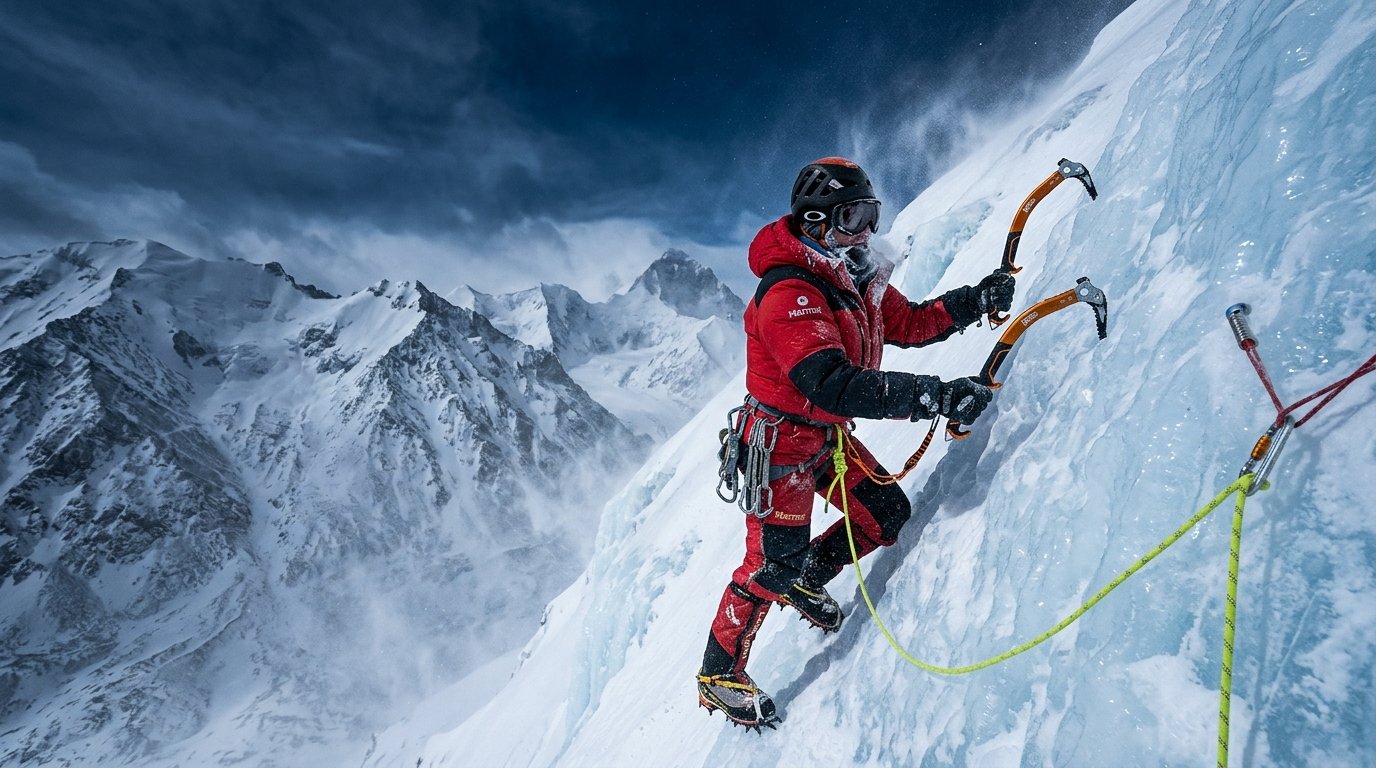
Unlike summer snow which offers soft kicking steps, winter summits are swept clear of loose powder by gale-force winds, exposing rock-hard 'blue water ice.' Climbing this terrain requires:
- Rigid 12-point chromoly steel crampons with razor-sharp front points.
- Ice screws and dedicated tubular v-thread anchors for belay stations.
- High-carbon steel technical ice axes for self-arrest and step carving.
The 4-Layer Thermal Architecture:
- 1Next-to-Skin Base Layer: 250 gsm 100% Merino Wool top and bottom. Avoid synthetics that retain odor and lose warmth when damp.
- 2Thermal Mid-Layer: Heavyweight Polartec Power Stretch fleece or a 60g Primaloft active jacket.
- 3Insulation Core: 800-900 Fill Power hydrophobic goose down parka with box-wall baffle construction.
- 4Outer Armor (Hard Shell): 3-layer Gore-Tex Pro membrane (28,000mm hydrostatic head) to deflect arctic winds.
Critical Winter Expedition Hacks:
- Insulate Your Water: Standard bottles freeze in 40 minutes. Use vacuum-insulated thermos flasks and keep them inside your sleeping bag at night.
- Battery Longevity: Lithium-ion camera and phone batteries lose 80% capacity at -20°C. Keep electronics in inner chest pockets close to body heat.
- Vapor Barrier Liners (VBL): Wear thin plastic sock liners inside your thick wool socks to stop sweat from freezing inside your boot insulation.
Topics:#Winter Expeditions#Ladakh#Sub-Zero#Gear Guide#Winter UT Kangri