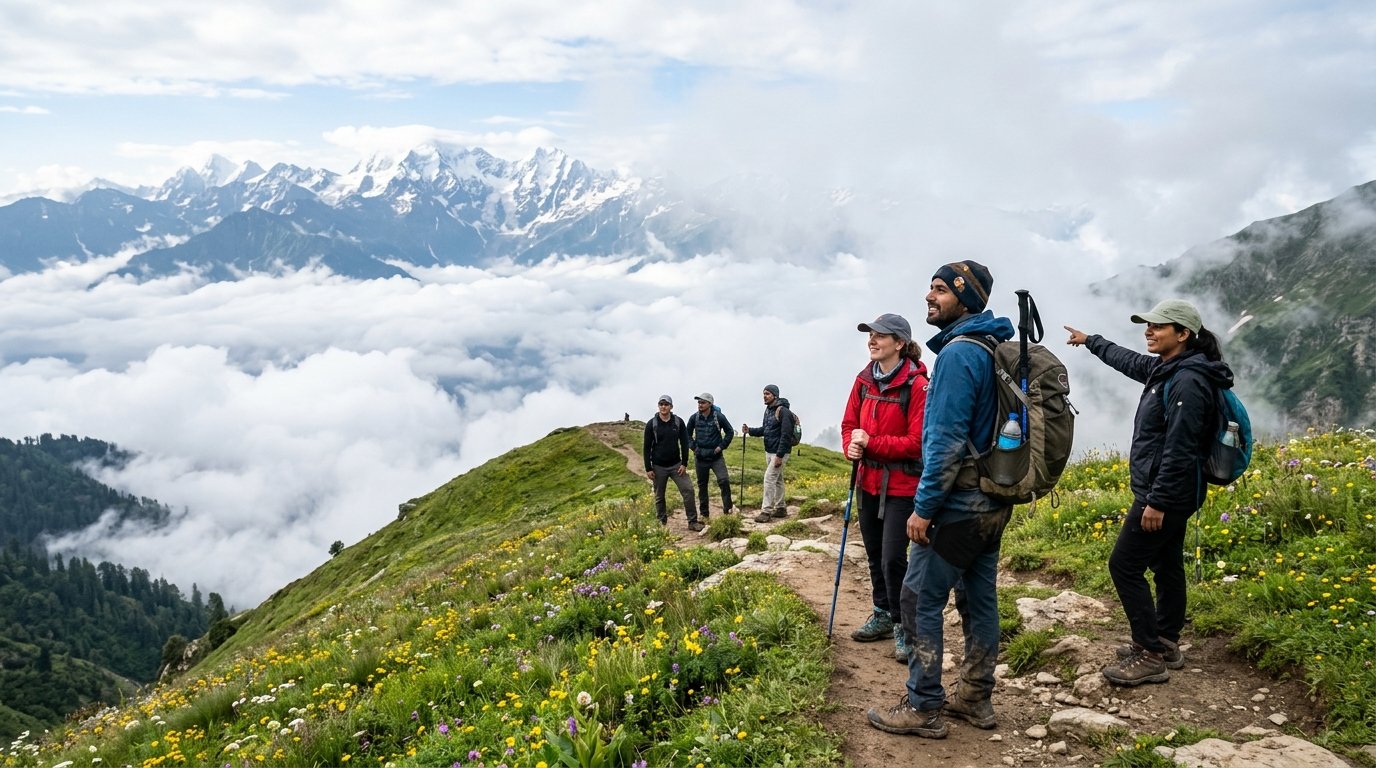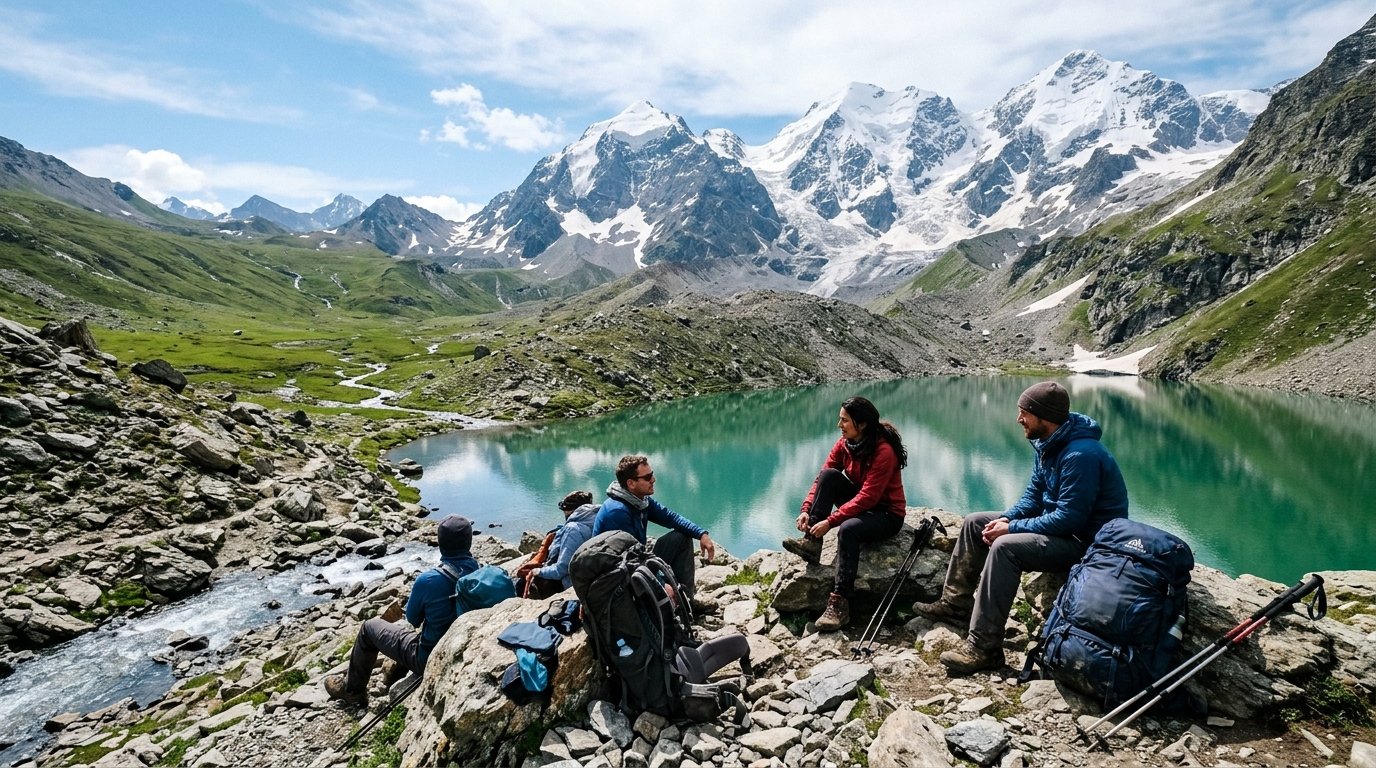
Not sure which Himalayan adventure to pick? This comprehensive guide compares Annapurna Base Camp (ABC), Friendship Peak, and the Deo Tibba expedition—three distinct mountain challenges—so you can choose the one that matches your personal mountain experience, physical fitness, and climbing ambitions.
Whether you are looking for your first high-altitude sanctuary hike, an entry into alpine mountaineering, or a demanding 6,000-metre technical ascent, understanding the terrain, commitment, and skills required is the key to a safe and successful journey.
Quick Comparison
| Adventure | Adventure Type | Max Altitude | Location | Duration | Prior Experience | Best Season |
|---|---|---|---|---|---|---|
| Annapurna Base Camp | Teahouse trek | ~4,130 m | Nepal (Sanctuary) | 7–10 days | None needed (Basic fitness) | Mar–May, Sep–Nov |
| Friendship Peak | Beginner mountaineering | ~5,289 m | Manali, Himachal | 6–8 days | Active fitness & stamina | May–Jun, Sep–Oct |
| Deo Tibba Expedition | Technical expedition | ~6,001 m | Kullu, Himachal | 10–14 days | Prior mountaineering / BMC | Late May–Jun, Sep–Oct |
Annapurna Base Camp Trek: The Classic Himalayan Trek
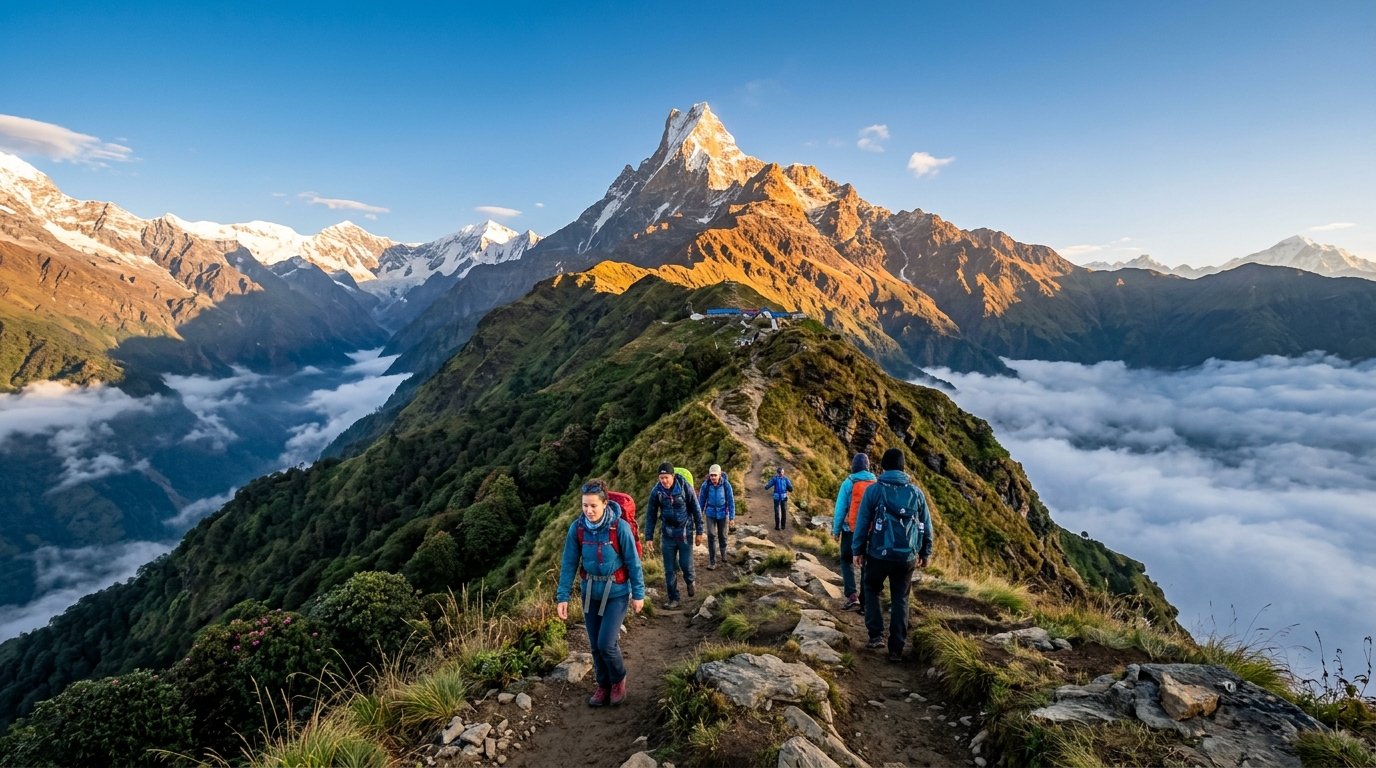
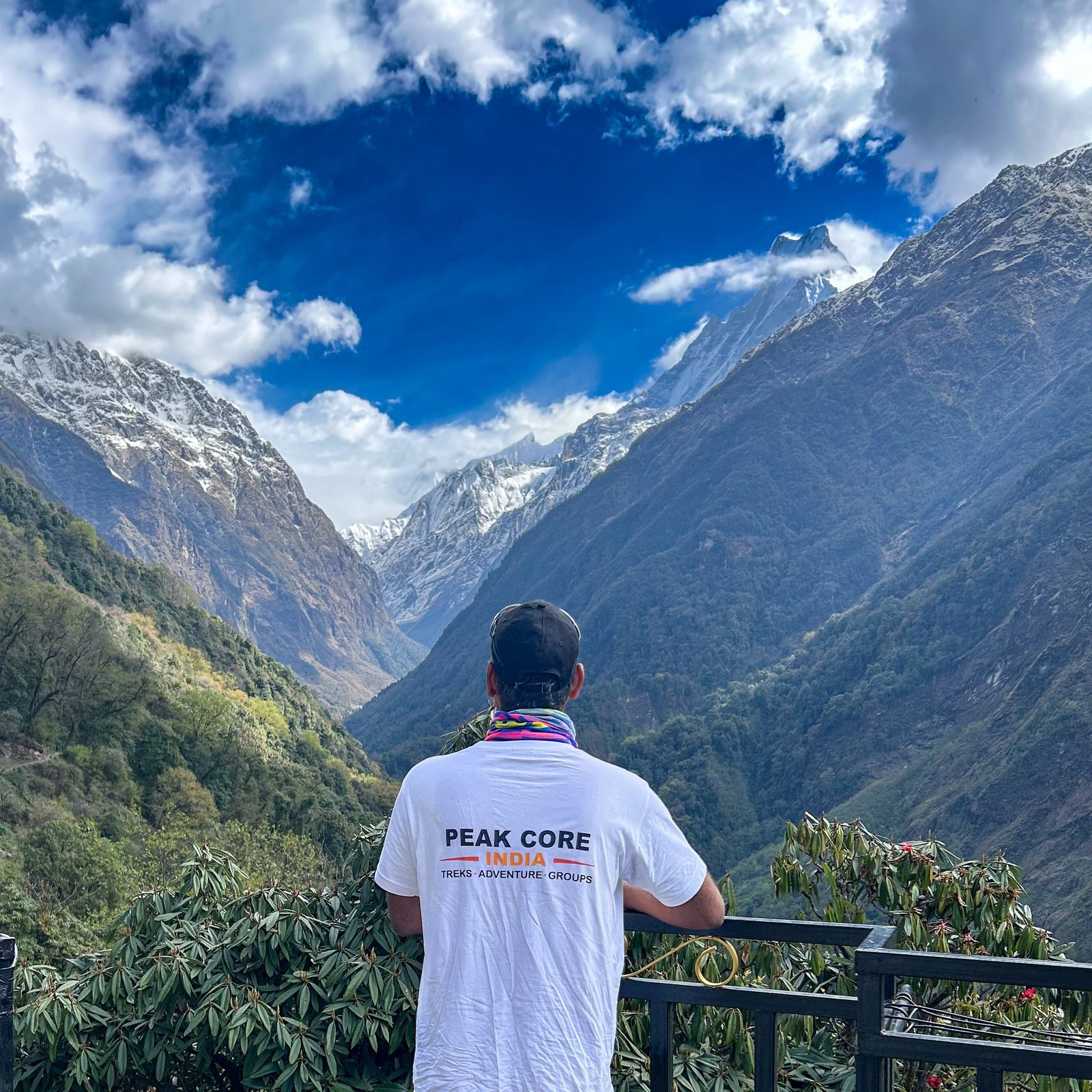
The Annapurna Base Camp Trek (ABC) at 4,130 m (13,550 ft) leads deep into a world-famous natural amphitheatre surrounded by towering peaks: Annapurna I (8,091 m), Annapurna South, Hiunchuli, Machapuchare (Fishtail, 6,993 m), and Gangapurna.
Typical Route: Pokhara → Nayapul / Jhinu → Ghandruk or Tikhedhunga → Chhomrong → Himalaya → Deurali → Machapuchare Base Camp (MBC) → Annapurna Base Camp (ABC).
Why Trek to ABC:
- Rhododendron Forests & Culture: Walk through lush rhododendron cloud forests, cascading waterfalls, terraced fields, and authentic Gurung villages in Chhomrong and Sinuwa.
- Comfortable Teahouse Lodging: Sleep in traditional mountain teahouses and lodges every night—no wilderness tents required.
- Beginner-Friendly High-Altitude Route: A clear, well-marked trail with steady acclimatization, making it one of the premier Himalayan treks for beginners.
- Unforgettable Sunrise: Witness the sunrise illuminating the sheer 3,000-metre south face of Annapurna I from the sanctuary rim.
Good to Know: You need an Annapurna Conservation Area Permit (ACAP) and TIMS card (Peak Core India handles all official permits). Altitude sickness is possible above 3,500 m, so ascend gradually, follow twice-daily SpO2 logs, and stay hydrated. The real physical challenge is the thousands of stone steps along the Modi Khola gorge, rather than technical climbing terrain.
Friendship Peak Climb: Your First 5,000 m Summit
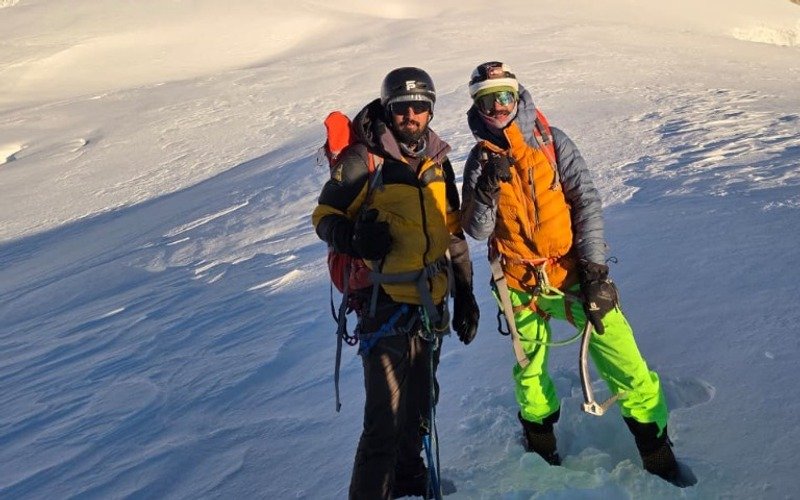
The Friendship Peak climb (5,289 m) situated in the Pir Panjal Range near Manali is widely recognized as one of India’s finest introductions to mountaineering. It is a genuine snow-and-ice summit climb, yet entirely manageable for a fit beginner accompanied by certified IMF & NIM mountain leaders.
Typical Route: Manali → Solang Valley → Dhundi → Bakar Thach (Base Camp, 3,300 m) → Advance Base Camp (Lady Leg, 4,000 m) → Summit Push (5,289 m) → Manali.
What to Expect on Friendship Peak:
- Comprehensive Skills Training: Learn essential rope work, crampon technique, ice axe handling, and self-arrest on snow slopes before the summit attempt.
- Alpine Midnight Summit Push: An exhilarating alpine-style push starting between 2:00 AM and 3:00 AM under starlit Himalayan skies.
- Panoramic Summit Vistas: Stand on the summit ridge with breathtaking 360-degree views of Hanuman Tibba (5,982 m), Indrasan (6,221 m), Deo Tibba, Shitidhar, and the Pir Panjal range.
Good to Know: Train with cardiovascular endurance, hill intervals, and leg-strength routines for 6–8 weeks beforehand. Mountain weather can change swiftly; always choose an itinerary that includes an acclimatization and weather buffer day.
Deo Tibba Expedition: A True 6,000 m Challenge
The Deo Tibba expedition (6,001 m), known locally as the "Abode of the Gods", is a serious, technical Himalayan mountaineering climb rising above the Kullu Valley. It demands navigating complex glaciers, jagged moraines, crevasse fields, and steep mixed snow and blue ice.
Typical Route: Manali → Jagatsukh → Chika / Seri → Tentu Pass / Base Camp → Advance Base Camp → High Camp / Summit Ridge → Summit (6,001 m).
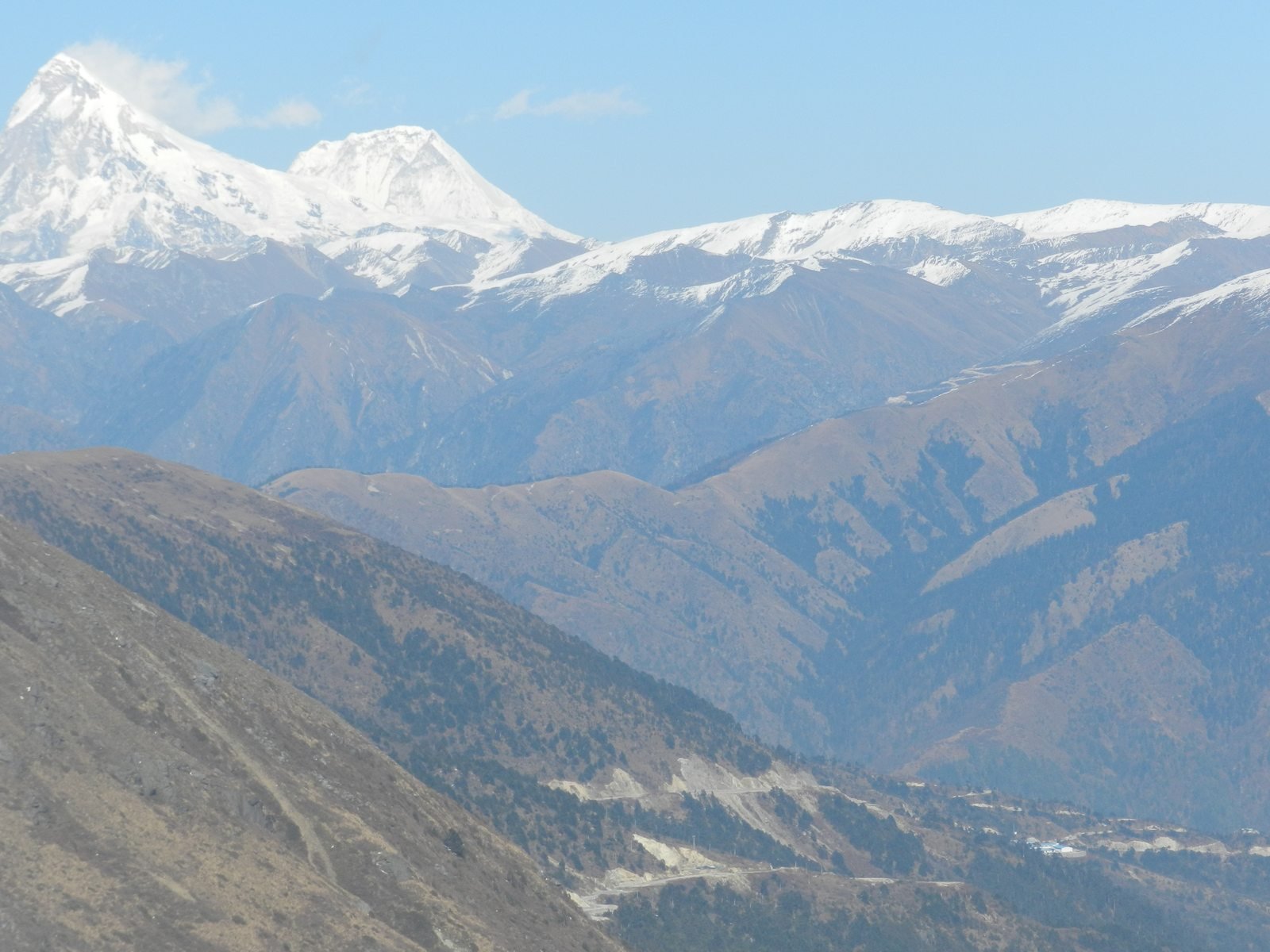
What Deo Tibba Demands:
- Prior Himalayan Climbing Experience: Essential prior high-altitude ascents or completion of Basic and Advanced Mountaineering Courses (BMC/AMC).
- High Endurance Fitness: Exceptional physical conditioning to handle 8–12 hour technical climbing days, steep couloirs, and heavy rucksack loads.
- Technical Alpine Gear: Double mountaineering boots, technical crampons, ice tools, climbing harness, ascenders/jumars, helmet, and -20°C rated down suits and sleeping bags.
- Reputable Expedition Team: Strict 1:2 or 1:3 rope ratios with experienced IMF-certified high-altitude Sherpas and instructors.
Why Do It: You live on the mountain for nearly two weeks, negotiate technical ice walls at the Tentu Pass, work as an integrated alpine team, and earn every single vertical metre. It serves as an exceptional stepping stone toward 6,500m and 7,000m Himalayan giants.
Which One Should You Choose?
- New to Trekking? Start with Annapurna Base Camp (ABC). You will experience 8,000-metre scenery, teahouse comfort, and high-altitude sanctuary living without technical gear.
- Want to Try Real Mountaineering? Choose Friendship Peak (5,289 m). It offers the thrills of crampons, fixed ropes, and an alpine summit push while remaining accessible to fit beginners.
- Ready for a Serious Technical Climb? Go for the Deo Tibba Expedition (6,001 m). Test your alpine mettle on glaciers, technical ice pitches, and extended high-camp living.
A sensible, time-tested mountaineering progression is: ABC (Teahouse Trek) → Friendship Peak (First 5,000m Summit) → Deo Tibba (Technical 6,000m Peak).
Essential Tips for Any Himalayan Trip
- 1Acclimatise Properly: Follow the golden alpine rule: *climb high, sleep low*. Never rush your ascent profile, and report any early headache or nausea immediately.
- 2Pack Smart: Focus on moisture-wicking layers, high-fill down insulation, high-SPF UV protection, category 3/4 sunglasses, and well-broken-in boots.
- 3Travel Responsibly: Adhere to Leave No Trace principles. Carry all non-biodegradable waste off the mountain and treat local communities and fragile alpine environments with deep respect.
- 4Check Current Conditions: Mountain permits, road connectivity through Solang and Kullu, snow levels, and seasonal weather windows change continuously.
- 5Know When to Turn Back: The summit is always optional; returning home safely to base camp is mandatory. Always respect your expedition leader's turnaround decisions.
Conclusion
Whether you seek a peaceful sanctuary trek, your maiden 5,000-metre Himalayan summit, or a full-scale 6,000-metre technical expedition, the Himalayas offer an unforgettable route tailored to your ambitions. Start where your present fitness and experience lie, build your alpine skills step by step, and keep climbing higher.
Ready to plan your next Himalayan journey? Explore our upcoming Fixed Departures or contact the Peak Core India team to design a custom private expedition.